Yes! Our honey is 100% pure, raw, and unfiltered.
The process of our local pure and raw honey starts in the beehives, where bees collect nectar from local flowers. Once the nectar turns into honey inside the hive, we carefully extract it using a cold centrifuge process, without applying heat or pasteurization, to preserve all its natural nutrients, enzymes, and health benefits. The honey is then minimally filtered to remove natural impurities, such as small bits of wax or honeycomb particles, but without altering its texture or properties.
The result is pure, unadulterated honey, just as the bees make it, with all its natural flavor and benefits intact.
Much of the honey sold in grocery stores has been heated to 160 degrees F or higher (for pasteurization) and has also been filtered using fine mesh/high-pressure filtration. This produces a very clear and very boring honey. Nutritionally, this form of over-processed honey is similar to refined, white sugar. Raw honey, on the other hand, is bottled with minimal processing. As a result, raw honey retains all of the good stuff that comes along with the nectar — pollen, enzymes, phytonutrients, anti-oxidants, vitamins, and minerals. The end result is a premium, all-natural, raw honey with an exceptional flavor profile. Our raw honey is as close as you can get to reaching into a beehive and scooping out a handful of golden goodness.
Consuming local raw honey is a popular natural remedy for seasonal allergies, as it is believed to contain small amounts of local pollen, which may help the body build tolerance over time. However, scientific evidence on this topic is limited, and results may vary from person to person.
Many of our customers have shared that regularly consuming local honey has helped alleviate their allergy symptoms. While we cannot provide medical advice, raw honey remains a natural and delicious option that many people choose to incorporate into their diet.
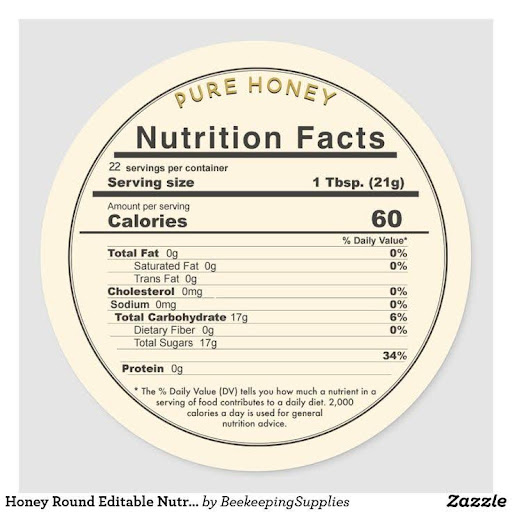
Nutritional content will vary between honey varieties, and even between the same honey type produced in different locations. On average, 1 tablespoon of raw honey contains the following:
Raw honey may contain botulism spores, for which children under 1-year-old have not developed internal defenses. Infant botulism is a rare but serious form of food poisoning.
Crystallization (also called sugaring) is a natural process. It does not mean that the honey has “gone bad” — it has merely changed form (kind of like water and ice). Any raw honey with a higher ratio of fructose to glucose sugars will resist crystallization. Honey varieties that are resistant to crystallization include tupelo, sage, and holly. Honey varieties such as cotton, orange blossom, and wildflower are likely to crystallize after a few months. If your honey starts to form crystals, just put it in a pan of hot water and shake the bottle every few minutes until the honey has re-liquefied. You may need to reheat the water more than once before the sugar crystals are fully dissolved.